
- Purchases by young homebuyers have fallen 15% since 2018 as rates and home prices have climbed
- The share of buyers under 35 with a co-applicant over 55 has risen to 1 in 30, up from 1 in 36 in 2018
- Among major metros, Anaheim ranks highest for purchases with an older applicant at 1 in 13, while Virginia Beach ranks lowest at 1 in 50
For a growing number of young Americans, the path to homeownership runs through the family. The share of purchases by buyers under 35 with a co-applicant over 55 – likely a parent or other relative – has increased 21% since 2018.
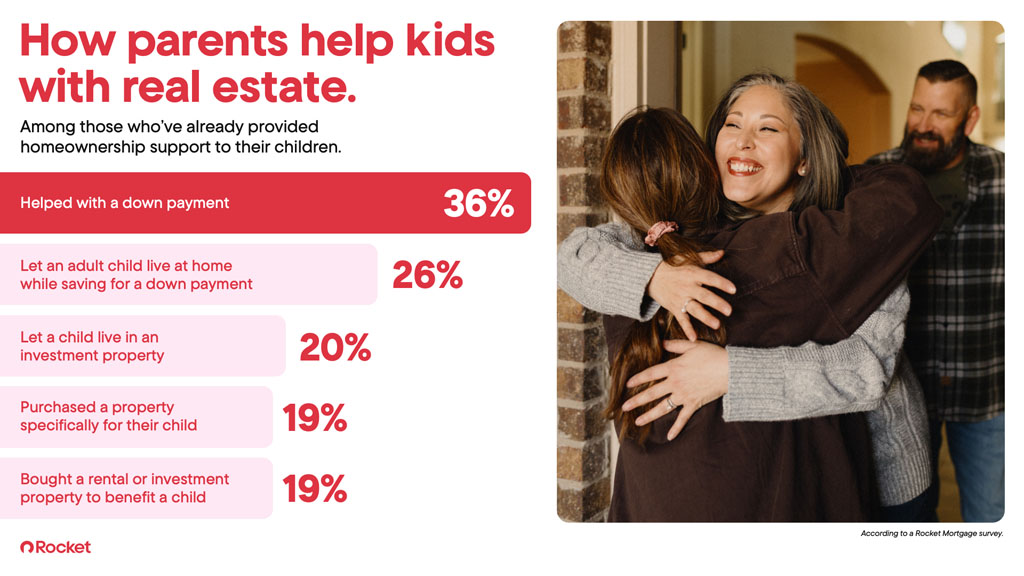
This trend was identified as part of a Rocket Mortgage analysis of Home Mortgage Disclosure Act (HMDA) data for 2018 to 2025. A separate Rocket Mortgage survey suggests why families are stepping in to help: 76% of parents said they’re likely to support major milestones, from education to homeownership.*
Family-Backed Deals Remain Steady Even as Young Homebuying Declines
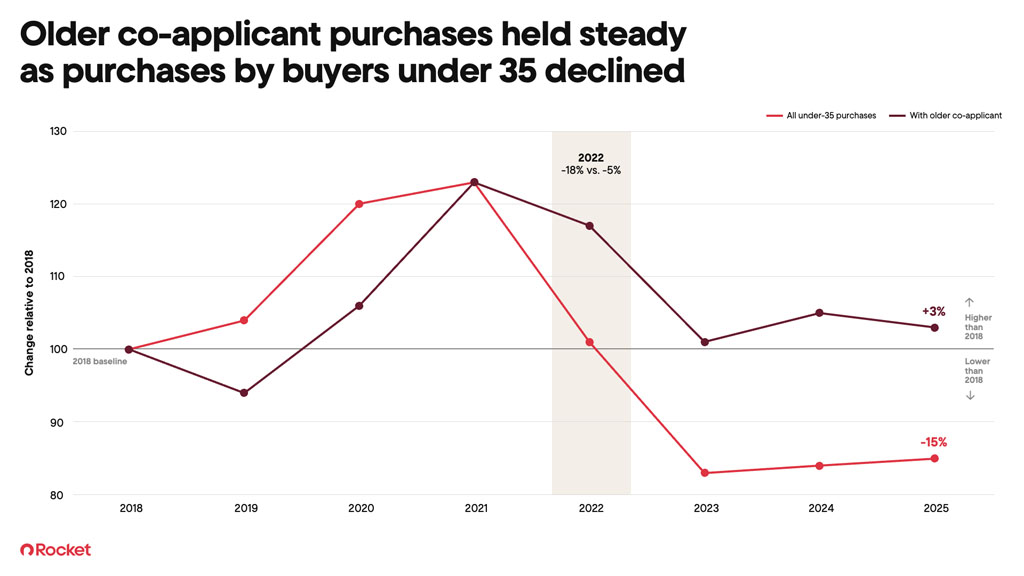
The ultra-low rates of 2020 and 2021 led many young buyers to step off the sidelines and buy homes of their own. That changed quickly in 2022, when rates and prices climbed from their pandemic-era lows and total under-35 purchases declined 18% in a single year. The continued increasing of interest rates has only served to keep even more young Americans on the sidelines since.
Young buyer demand has risen and fallen alongside rates and prices over the last seven years, with total purchases down 15% since 2018. Purchases involving an older co-applicant have felt far less of that turbulence, rising roughly 3% over the same period and remaining a consistent fixture in an otherwise volatile market.
“Parents understand the stability a home provides, along with the opportunity to build equity and wealth over time,” said Bill Banfield, Chief Business Officer at Rocket Mortgage. “Many don’t want to see their children delayed or left behind, so they’re willing to join the loan as a co-applicant, adding income to what the family can put behind the purchase.”
Where Family Help Shows Up Most
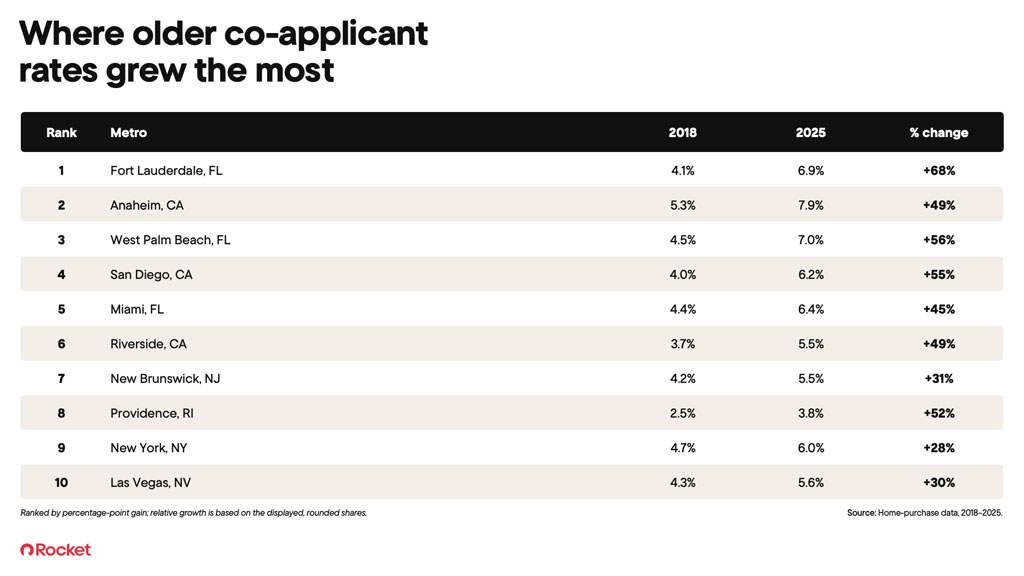
In nearly every major U.S. metro, young people are more likely to buy with an older co-applicant today than they were in 2018. The pattern is strongest in Southern California and South Florida.
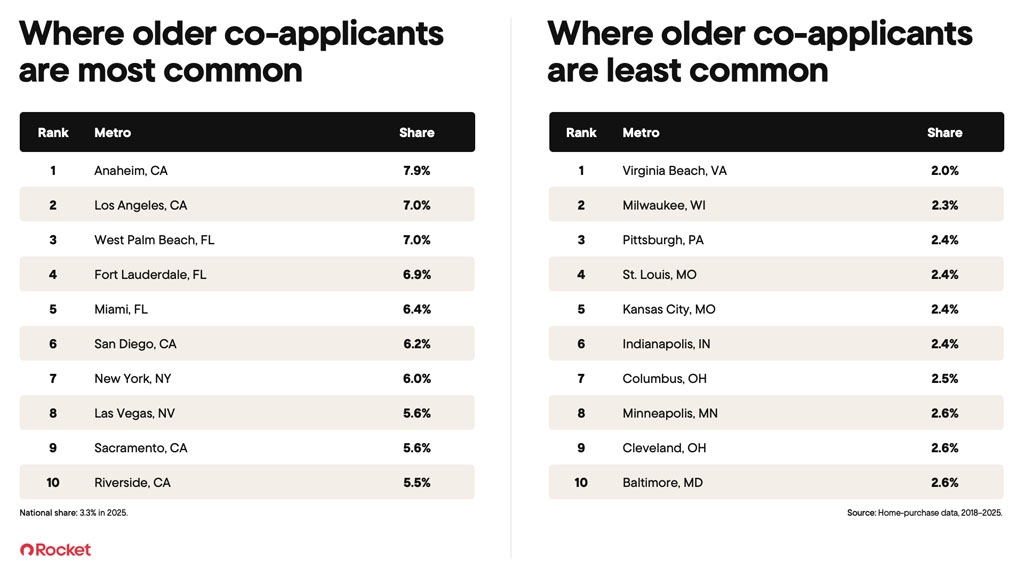
Anaheim ranks highest: about 1 in 13 buyers under 35 purchased with an older co-applicant in 2025. Fort Lauderdale has changed the fastest, with the share climbing roughly 68% since 2018, the steepest increase nationwide.
Midwest markets show the smallest shares, with Milwaukee, St. Louis and Kansas City all near the bottom. Virginia Beach ranks lowest overall in older co-applicants, at about 1 in 50, roughly a quarter of Anaheim’s rate.
“When a parent or relative joins a loan as a co-applicant, their full financial picture becomes part of it,” said Banfield. “In the highest cost markets, that combined strength may help put a home within reach. It also means each person is responsible for the full loan amount, so it’s important to have conversations about expectations upfront.”
The Bottom Line
Affordability has reshaped what young homebuyers can manage on their own, and family help is filling part of that gap. For roughly 1 in 30 of them, that help now shows up on the loan itself.
Methodology
This analysis is based on a Rocket Mortgage review of Home Mortgage Disclosure Act (HMDA) data for home purchase originations from 2018 through 2025. HMDA age-group reporting has included applicant and co-applicant age since 2018, allowing for a consistent view of this trend across the full period.
A co-applicant is defined as an additional buyer listed on a loan application, distinct from the primary applicant, as reported under HMDA. The national analysis measures the share of purchase originations made by primary applicants under age 35 that included a co-applicant age 55 or older. Metro-level findings are limited to the top 50 U.S. metropolitan areas by population.
*The survey findings cited in this analysis are from a Rocket Mortgage survey of 3,000 U.S. adults ages 18-75, weighted to be nationally representative of the general population per Census benchmarks. Fieldwork was conducted in July 2026.